



Medicinal cannabis and the pharmacist: from registration to dispensing.
The use of medicinal cannabis in the treatment of various disorders has been steadily increasing. Therefore, specific regulations that are part of a pharmacist's daily routine guarantee the use of the substance.
Although medicinal cannabis-based products cannot be considered traditional herbal medicines, their registration must be based on clinical evidence as recommended by... Anvisa's RDC No. 26/2014, which provides for the registration of herbal medicines.
It is necessary to understand that medicinal plants are plant species used for therapeutic purposes. These plants possess many substances derived from their secondary metabolism that justify their therapeutic use. Some examples of these substances belong to the cannabinoid class. Furthermore, medicinal plants can undergo processes and be transformed into phytotherapeutic products. Thus, phytotherapeutic products are products made from active plant raw materials intended for cure, prophylaxis, or palliative care. However, the concept of phytotherapeutic products differs from phytopharmaceuticals, which are composed of one or more isolated active substances that undergo processes such as purification and structural elucidation..
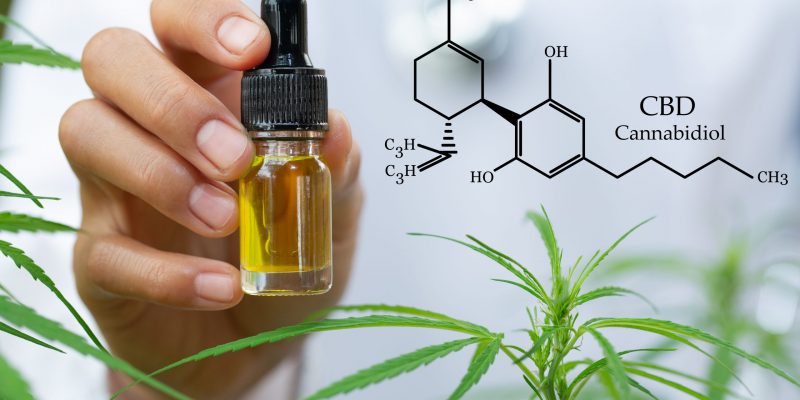
Following the regulations Anvisa's RDC No. 327/2019Currently, it is already possible to import or even manufacture industrialized products containing plant-derived ingredients or phytopharmaceuticals as active ingredients. Cannabis sativaThese are the so-called cannabis products. Their composition is predominantly cannabidiol (a type of phytocannabinoid commonly represented by the acronym CBD), and tetrahydrocannabinol with no more than 0.2% (a type of phytocannabinoid, represented by the acronym THC), the latter being associated with the effects obtained through recreational use. It is always necessary to respect this proportion of phytocannabinoids, except in cases of palliative care (assistance to patients whose disease no longer responds to curative treatment).
Brazilian Health Regulatory Agency (Anvisa) Resolution RDC 327/2019 establishes important criteria to ensure the safe use of medicinal cannabis:
-
In Brazil, the importation of pharmaceutical raw materials is only permitted in the form of plant-derived products, phytopharmaceuticals, in bulk, or as manufactured products.
-
The importation of cannabis spp. plants or plant parts is not permitted;
-
It is prohibited to manipulate compounded formulas containing derivatives or phytopharmaceuticals based on cannabis spp.
-
Cannabis products cannot have a trade name;
-
Only oral and nasal administration methods are authorized;
-
Advertising and free samples of products are prohibited;
-
If there is a qualitative change in the excipients in the product, according to the IN No. 71/2020The phrase "NEW FORMULA" must be included on the packaging and remain there for at least 1 year.
Registration of products based on medicinal cannabis
Furthermore, to manufacture or import, companies need to have Sanitary Authorization. Anvisa grants the authorization, which is valid for 5 years, upon presentation of the following documents that appear in RDC 327/2019, RDC 318/2019:
1 – Cannabis product petition form, available on the Anvisa website.2 – A duly completed application form for Sanitary Authorization of Cannabis products, containing the documents identified in items 1.14 and 3, according to the model available in Annex I of RDC 327/2019.3 – Justification containing a summary of the technical and scientific rationale for the formulation of the Cannabis product and the route of administration.4 – A justification containing a summary of the rationale for the development of the phytotherapeutic or phytopharmaceutical cannabis product and the concentrations of the main cannabinoids, including, at a minimum, CBD and THC.5 – packaging and labeling layout6 – informational brochure layout7 – Declaration of conformity, as per Annex II of RDC 327/20198 – Quality control report for raw materials and finished product.9 – latest version of the document(s) containing the specification limits and analytical methods for product quality control10 – report of stability studies relating to 3 (three) batches of the product11 – Informed Consent Form (ICF) to be signed by the patient, as per Annex III of RDC 327/2019, which must be completed with specific data regarding the Cannabis product that is intended to be authorized; and12 – Cannabis product usage monitoring plan |
