



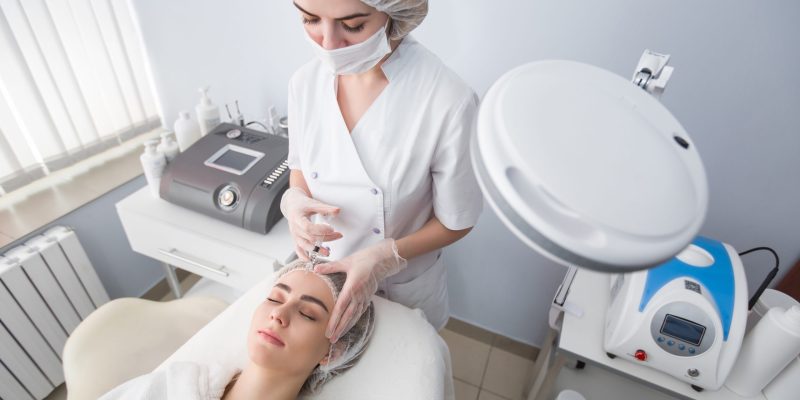
What differentiates a pharmacist from other beauty professionals?

Since 2018, according to CFF Resolution No. 669/18A pharmacist is qualified to practice aesthetic health provided they hold a higher education degree in pharmacy with a concentration in aesthetics and cosmetics, or have completed a postgraduate program. Broadly speaking recognized by the Ministry of Education in the field of aesthetic health, or a graduate of a short course in the field of aesthetics recognized by the Federal Council of Pharmacy.
Their responsibilities include performing facial, body, and hair aesthetic procedures, using cosmetic products, techniques, and equipment registered with ANVISA (Brazilian Health Regulatory Agency). In addition, they may develop Standard Operating Procedures (SOPs) related to aesthetic therapeutic techniques and resources.
According to Anvisa Resolution No. 752/2022 Personal hygiene products, cosmetics, and perfumes can be classified as Grade 1 or Grade 2. Grade 1 products have properties whose proof is not initially necessary and do not require specific information about their form and restrictions of use. Grade 2 products have specific indications, therefore requiring proof of safety and/or efficacy, as well as information and precautions, method and restrictions of use.
This ANVISA (Brazilian Health Regulatory Agency) regulation is extremely important. It not only provides definitions and classifications, but also technical requirements for labeling and packaging, parameters for microbiological control, as well as technical requirements and procedures for the registration of personal hygiene products, cosmetics and perfumes, which should be known by pharmacists working in the field of aesthetics.
Such personal hygiene products, cosmetics, and perfumes must comply with the list of permitted active ingredients in cosmetic products for straightening or curling hair contained in... IN No. 124/2022 from Anvisa.
Deadlines
The validity period for registration is ten years for such products, as well as for health products, as stipulated in... Anvisa's RDC No. 185/2001Medical products are also used by pharmacists working in aesthetics and are divided into classes according to their usage characteristics and registration:
- Non-Invasive Medical Products
- Invasive Medical Products
- Active Medical Products
Software related to a medical product automatically falls into the same category. It is important to note that the procedures for regulating software as a medical device (SaMD) are governed by... Anvisa's RDC No. 657/2022 And it is the responsibility of the pharmaceutical professional to be aware of this in order to correctly follow the process.
This was just a brief overview…we already have several regulations related to specific menus in LegalPharma appKnowing these standards and consulting them whenever necessary is part of the routine of a well-informed and credible pharmaceutical professional. Count on us! LegalPharma!
by Katherine Cervai
